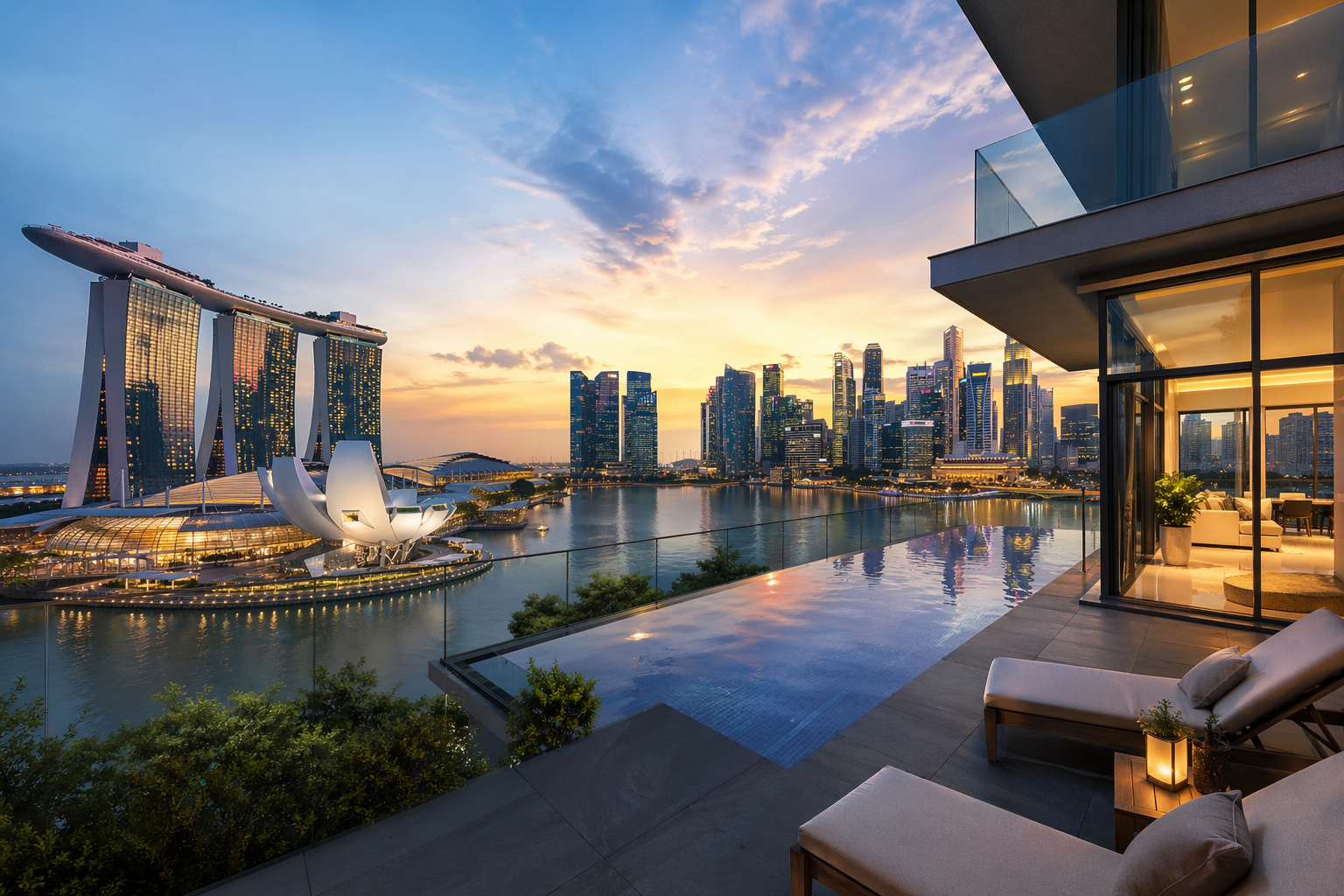
Singapore Property Market in 2026: The Complete Guide to Buying, Investing, and Living in Asia’s Premier Real Estate Destination
Singapore has long been regarded as one of the world’s most stable and attractive property markets. Despite being one of the smallest countries in Asia, it has built an international reputation for offering high-quality real estate, strong legal protection, transparent regulations, and outstanding urban planning. For decades, investors, homeowners, and expatriates have viewed Singapore property as both a secure investment and an excellent place to live.
In 2026, Singapore continues to demonstrate remarkable resilience. While global economic uncertainty, inflation, and changing interest rates have affected property markets worldwide, Singapore’s real estate sector remains supported by strong economic fundamentals, limited land supply, and prudent government policies. Whether you are buying your first home, searching for an investment property, or relocating to Singapore, understanding how the market works is essential.
Overview of Singapore’s Housing System
Singapore has one of the most unique housing systems in the world. The government plays an active role in ensuring that citizens have access to affordable homes while maintaining a competitive and attractive private property market.
The Housing & Development Board (HDB) is responsible for developing public housing, where more than 80% of Singapore’s residents live. HDB estates are carefully planned communities featuring schools, healthcare facilities, shopping centres, parks, and excellent public transport.
Alongside public housing is a thriving private property market consisting of condominiums, executive condominiums, landed homes, and luxury developments. This balanced approach has helped Singapore avoid the extreme property bubbles experienced by many major cities.
Types of Properties in Singapore
HDB Flats
HDB flats remain the most common housing option. They are available in different sizes, ranging from two-room apartments to executive flats.
These homes offer:
Affordable pricing for eligible citizens
Excellent public transport connections
Access to schools, clinics, parks, and shopping malls
Strong resale demand
After meeting the Minimum Occupation Period (MOP), owners may sell their flats on the resale market, creating opportunities for both buyers and investors who meet eligibility requirements.
Private Condominiums
Private condominiums are among the most popular choices for professionals, expatriates, and investors.
Most developments include premium facilities such as:
Swimming pools
Fitness centres
Clubhouses
Children’s playgrounds
Landscaped gardens
BBQ areas
24-hour security
Prime districts including Orchard Road, Marina Bay, River Valley, Newton, and Tanjong Pagar remain highly sought after because of their proximity to Singapore’s financial district and lifestyle attractions.
Executive Condominiums (ECs)
Executive Condominiums are a unique housing option available in Singapore.
Initially sold under government regulations to eligible buyers, ECs gradually become fully private after a specified period. This provides homeowners with an opportunity to enjoy condominium facilities while purchasing at prices generally lower than comparable private developments.
Landed Properties
Landed homes represent the most exclusive residential properties in Singapore.
These include:
Terrace houses
Semi-detached houses
Detached houses
Good Class Bungalows (GCBs)
Because Singapore has limited land, landed homes are extremely scarce and often command multi-million-dollar price tags. Ownership by foreigners is generally restricted, making these properties even more exclusive.
Factors That Influence Property Prices
Several important factors determine property values in Singapore.
Location
Location remains the single biggest factor affecting property prices.
Homes located near the Central Business District (CBD), Orchard Road, Marina Bay, and other prime districts typically command premium prices.
MRT Accessibility
Properties within walking distance of MRT stations generally enjoy stronger demand and better long-term appreciation because of Singapore’s world-class public transport network.
Government Policies
Singapore actively manages its housing market through cooling measures designed to maintain long-term stability.
Policies include:
Additional Buyer’s Stamp Duty (ABSD)
Loan-to-Value (LTV) limits
Total Debt Servicing Ratio (TDSR)
Seller’s Stamp Duty (SSD)
These regulations discourage excessive speculation while helping create a healthier property market.
Economic Performance
Singapore’s position as one of Asia’s leading financial centres means employment growth, foreign investment, business expansion, and population growth all influence housing demand.
Singapore Property Market Trends in 2026
Several important trends continue to shape the market.
Stable Price Growth
Although property prices have increased steadily over recent years, growth has become more sustainable due to government cooling measures and higher financing costs.
This balanced environment benefits genuine homebuyers while reducing speculative activity.
Strong Demand for Luxury Homes
Singapore remains a preferred destination for global wealth.
Luxury condominiums and prime residential developments continue attracting international investors seeking political stability, excellent education, and long-term asset preservation.
Growing Interest in Smart Homes
Developers increasingly incorporate smart technology into new projects.
Popular features include:
Smart digital locks
Energy-efficient lighting
Mobile home automation
Intelligent security systems
Smart air-conditioning controls
These technologies improve convenience while reducing energy consumption.
Sustainability and Green Living
Environmental sustainability has become a major priority.
Many new developments feature:
Green building certification
Solar energy systems
Rainwater harvesting
Electric vehicle charging stations
Energy-efficient building materials
Community gardens
These features appeal to environmentally conscious buyers and contribute to long-term value.
Why Investors Choose Singapore
Singapore consistently ranks among the world’s safest investment destinations.
Major advantages include:
Stable political environment
Transparent legal framework
Strong property ownership rights
Low corruption
Excellent infrastructure
International financial hub
High rental demand
Strong long-term capital appreciation
Many investors also appreciate Singapore’s strategic location, making it an ideal base for business operations across Asia.
Challenges Buyers Should Consider
Despite its strengths, Singapore property ownership involves several considerations.
High Property Prices
Singapore remains one of Asia’s most expensive property markets.
Buyers should budget not only for the purchase price but also for:
Stamp duties
Legal fees
Mortgage costs
Maintenance fees
Property taxes
Foreign Buyer Restrictions
Foreign purchasers face additional regulations, including higher Additional Buyer’s Stamp Duty and restrictions on certain property types, particularly landed homes.
Limited Supply
Because land is scarce, new residential developments are carefully managed.
Limited supply helps support long-term property values but also creates strong competition for desirable homes.
Outlook for the Singapore Property Market
The long-term outlook remains positive.
Several factors continue supporting the market:
Ongoing infrastructure improvements
Population growth
Expansion of business districts
Continued foreign investment
Urban redevelopment projects
Smart city initiatives
Sustainable housing developments
Although short-term price fluctuations are possible due to interest rates and global economic conditions, Singapore’s carefully regulated property market is expected to remain one of the most resilient in the world.
Conclusion
Singapore’s property market continues to set the benchmark for stability, quality, and long-term investment potential. From affordable public housing to world-class luxury residences, the country offers diverse opportunities for homeowners and investors alike.
While high entry costs and government regulations require careful planning, these same measures have helped create one of the world’s most sustainable real estate markets. Combined with excellent infrastructure, a transparent legal system, and strong economic fundamentals, Singapore remains one of Asia’s most desirable destinations for property ownership.
Whether you are planning to buy your first home, diversify your investment portfolio, or relocate to one of the world’s safest and most dynamic cities, Singapore’s real estate market in 2026 continues to offer outstanding opportunities for long-term growth, financial security, and an exceptional quality of life.