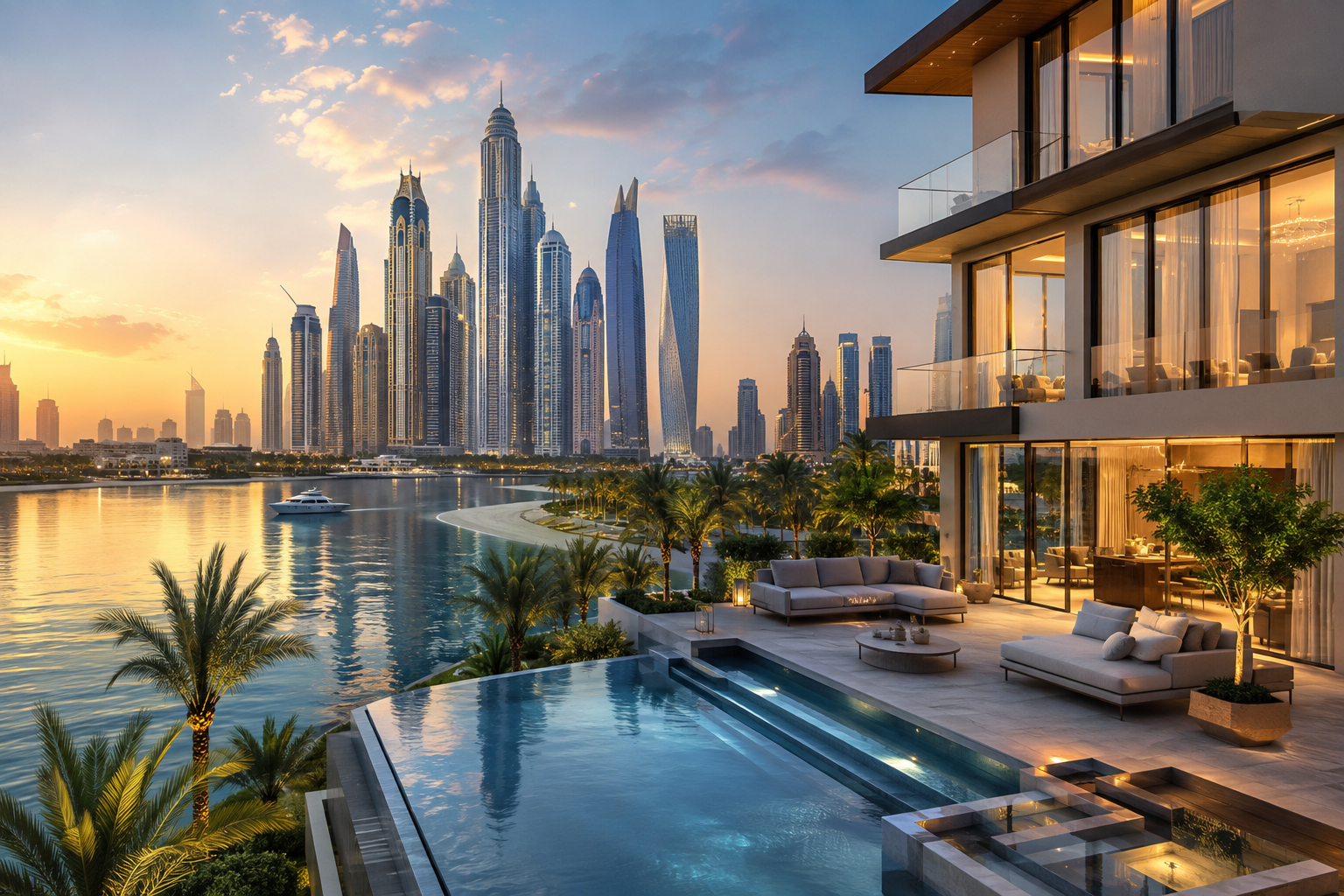
Property in the UAE: A Complete Guide to Buying, Investing, and Finding Your Ideal Home
The United Arab Emirates has become one of the most talked-about property markets in the world. From the impressive skyline of Dubai to the peaceful waterfront communities of Abu Dhabi, the UAE offers a wide range of opportunities for people looking to buy a home, move abroad, or invest in real estate.
For many international buyers, the appeal goes beyond modern apartments and luxury villas. The UAE combines a strong business environment, international communities, modern infrastructure, attractive residential developments, and a lifestyle that continues to attract people from around the world.
Whether you are searching for a family home in Abu Dhabi, a modern apartment in Dubai, a townhouse for long-term living, or an investment property with rental potential, understanding the market is an important first step.
This guide explores the UAE property market, the most popular types of homes, important locations, foreign ownership, buying considerations, investment opportunities, and practical advice for potential buyers.
Why Is UAE Property Attracting International Buyers?
The UAE has developed into a major international business and lifestyle destination. Dubai, in particular, has become well known for tourism, finance, technology, retail, entertainment, and international business.
This economic diversity supports demand for housing. Professionals move to the UAE for work, families relocate for lifestyle opportunities, and international investors consider residential property as part of their global investment strategy.
Another important attraction is the variety of property available. Buyers do not have to choose only between a small apartment and an expensive luxury villa. The market includes studios, one-bedroom apartments, larger family apartments, townhouses, villas, branded residences, and commercial properties.
The UAE also offers a highly international environment. In major cities, residents can find international schools, restaurants, shopping centers, healthcare facilities, entertainment venues, and communities designed for different lifestyles.
For property buyers, this creates a market where housing demand can come from many different groups rather than one narrow customer base.
Dubai Property Market: Modern Living and Global Appeal
Dubai is arguably the UAE’s best-known property market. Its combination of modern architecture, business districts, beaches, shopping destinations, tourism, and residential communities makes it attractive to both residents and investors.
Property in Dubai ranges from compact apartments suitable for young professionals to large villas designed for families.
Downtown areas can appeal to buyers who want easy access to business and entertainment. Waterfront communities attract people who prefer views, beaches, and resort-style living. Family-oriented communities offer larger homes, parks, schools, and quieter surroundings.
One of Dubai’s important advantages for international buyers is the availability of designated freehold areas. Foreign nationals can own freehold property in areas approved for foreign ownership, subject to applicable regulations.
This has helped make Dubai one of the most internationally accessible real estate markets in the region.
However, buyers should never assume that every property in Dubai has the same ownership structure. The exact rights associated with a property depend on the location, title, and applicable regulations.
Before purchasing, it is important to verify ownership conditions and registration requirements with the relevant authorities.
Abu Dhabi Property Market: A Growing Alternative
Abu Dhabi, the capital of the UAE, offers a different experience from Dubai.
The city has a reputation for being more relaxed in some areas while still providing excellent infrastructure, business opportunities, cultural attractions, and high-quality residential developments.
Abu Dhabi has also become increasingly attractive to property investors. According to the Abu Dhabi Real Estate Centre, the emirate recorded AED 117 billion in total real estate transactions during the first half of 2026, representing a significant increase from the previous year.
International investment has also contributed to the growth of the market, demonstrating the increasing interest in Abu Dhabi property.
Popular investment areas include locations such as Yas Island, Saadiyat Island, Al Reem Island, Al Raha Beach, and other designated investment areas.
Each location has its own personality.
Yas Island is known for entertainment, leisure, attractions, and modern residential communities. Saadiyat Island has a more premium and cultural atmosphere, while Al Reem Island is popular for modern apartments and urban living.
For buyers who prefer a balance between city convenience and residential comfort, Abu Dhabi deserves serious consideration.
Understanding Property Ownership for Foreign Buyers
One of the most common questions from international buyers is whether foreigners can purchase property in the UAE.
The answer is yes, but the rules depend on the emirate and the specific location.
In Dubai, foreign buyers can purchase freehold property in designated areas. Other ownership structures may also exist, depending on the property and applicable regulations.
In Abu Dhabi, non-UAE nationals can acquire property rights in designated investment areas under the relevant regulations.
This distinction is important because purchasing property is a legal transaction, not simply a financial decision.
Before signing a contract, international buyers should confirm the exact ownership structure, registration process, property status, developer information, and applicable fees.
Professional legal or property advice can also be useful, particularly for buyers purchasing from overseas or making a significant investment.
Choosing the Right Type of Property
The best property depends on what you want to achieve.
An apartment can be an excellent choice for someone who wants a relatively convenient home in an urban environment. Apartments are especially popular among professionals and investors interested in rental markets.
A villa may be more appropriate for families who need multiple bedrooms, outdoor space, privacy, and parking.
Townhouses offer another interesting option. They can provide more living space than many apartments while remaining part of a managed residential community.
There are also luxury and branded residences aimed at buyers looking for premium services, distinctive architecture, and exclusive amenities.
For investors, the most important consideration is not necessarily which type of property looks the most impressive. Instead, the focus should be on demand, location, purchase price, operating costs, rental potential, and long-term marketability.
Location Should Come Before Luxury
It is easy to become attracted to a beautiful property.
A modern kitchen, large balcony, swimming pool, impressive lobby, or spectacular view can make a property feel like an excellent investment.
But a beautiful property in the wrong location may not perform as well as a simpler property in a highly desirable area.
Location influences almost everything.
It affects the people who are likely to rent the property, the amount they may be willing to pay, how quickly the property can be rented, future demand, and the property’s potential resale appeal.
When evaluating a UAE property, consider access to major roads, public transportation, schools, hospitals, shopping centers, business districts, beaches, airports, and leisure facilities.
It is also worth researching planned infrastructure and new developments around the property.
A neighborhood that is still developing today may become significantly more attractive in the future, but buyers should balance potential growth against the risks associated with emerging areas.
Buying Property for Rental Income
Rental property is one of the reasons investors consider the UAE real estate market.
Dubai and Abu Dhabi have large populations of expatriate workers, professionals, families, and international residents. This creates ongoing demand for different types of accommodation.
However, investors should avoid focusing only on advertised rental yields.
A realistic investment calculation should include service charges, maintenance, management expenses, insurance where applicable, vacancy periods, financing costs, and other transaction expenses.
For example, a property may appear attractive because of its advertised annual rent, but the actual return can be lower after operating costs.
Investors should also investigate the local rental market. Look at comparable properties rather than relying exclusively on projected figures provided by a seller or developer.
Understanding the target tenant is equally important.
A studio near a major business district may attract young professionals. A larger townhouse near schools may appeal more to families. A furnished apartment in a tourism-oriented location may serve a different rental market.
The property should therefore be matched with the type of tenant most likely to demand it.
Ready Property or Off-Plan Property?
Buyers in the UAE often have the choice between completed properties and off-plan developments.
A ready property allows the buyer to inspect the actual unit, building, surroundings, facilities, and community before completing the purchase.
This can be attractive for buyers who want immediate occupancy or rental income.
Off-plan property is purchased before construction is completed. One potential advantage is access to new developments and structured payment plans. Buyers may also have a wider choice of units during the early stages of a project.
However, off-plan investments come with additional considerations.
Construction schedules can change, market conditions can move during the development period, and the final environment may differ from the buyer’s initial expectations.
Before buying an off-plan property, investigate the developer’s history, project approvals, payment schedule, completion expectations, escrow arrangements where applicable, and contractual terms.
A lower initial price does not automatically mean a better investment.
Important Costs Beyond the Purchase Price
One of the most common mistakes made by first-time property buyers is focusing only on the advertised purchase price.
The real cost of owning property can include registration charges, administrative fees, broker fees, financing expenses, service charges, maintenance, insurance, and other costs depending on the property and transaction.
Service charges are particularly important for apartments and managed communities.
These charges can contribute to the maintenance of shared facilities such as lobbies, elevators, swimming pools, gyms, landscaping, security, and common areas.
Before purchasing, ask for a clear breakdown of expected costs.
If you are buying for investment purposes, include these expenses in your financial calculations from the beginning rather than treating them as unexpected costs later.
What Should Buyers Check Before Signing?
A property purchase is a major financial commitment, so careful due diligence is essential.
First, verify the property’s legal status and ownership information.
Second, confirm that the seller or developer has the right to complete the transaction.
Third, review the purchase agreement carefully. Pay attention to payment schedules, completion dates, penalties, cancellation conditions, maintenance responsibilities, and other contractual obligations.
For off-plan projects, investigate the developer and project history.
For resale properties, inspect the physical condition of the property and ask about outstanding service charges or other obligations.
Buyers should also verify information through the relevant government authority rather than relying entirely on advertising material.
This is especially important for international buyers who may not be familiar with UAE property procedures.
Is UAE Property a Good Investment?
There is no universal answer.
Property investment always involves risk, and the performance of a particular property depends heavily on its location, price, quality, demand, financing, and broader market conditions.
The UAE property market offers opportunities, but investors should approach it with realistic expectations.
A successful investment is not necessarily the property that rises in price the fastest. It may be the property that provides a combination of reasonable purchase cost, consistent rental demand, manageable expenses, good location, and long-term resale appeal.
Investors should also consider their own financial position.
Buying property with excessive debt can create pressure if interest rates, rental income, or personal circumstances change.
A carefully planned investment strategy is generally more sustainable than making a decision based purely on market excitement.
Dubai or Abu Dhabi: Which Is Better?
There is no single winner because the two markets serve different needs.
Dubai may be more attractive to buyers who want a highly international city with strong tourism, entertainment, business activity, and a wide range of residential projects.
Abu Dhabi may appeal to buyers looking for a capital-city environment, established communities, cultural attractions, and growing investment opportunities.
Instead of asking which city is better, buyers should ask which city is better for their personal objective.
Someone buying a home for a family may prioritize schools, parks, commuting time, and community facilities.
An investor may focus more heavily on rental demand, acquisition price, service charges, and future resale prospects.
The right property is ultimately the one that fits the buyer’s financial and lifestyle goals.
The Future of Property in the UAE
The long-term outlook for UAE real estate continues to attract attention because of the country’s international economy, infrastructure investment, population growth, tourism sector, and business environment.
Dubai continues to develop new residential communities and major projects, while Abu Dhabi is strengthening its position as a major investment and economic center.
The growing participation of international investors also demonstrates the global appeal of the UAE property sector.
Nevertheless, buyers should remember that real estate markets move in cycles.
Prices can rise and fall. Rental demand can change. New supply can affect individual communities. Economic conditions can influence purchasing power.
The strongest approach is therefore to focus on fundamentals rather than short-term excitement.
Final Thoughts for Property Buyers in the UAE
Buying property in the United Arab Emirates can be an exciting opportunity, whether your goal is to own a home, relocate, generate rental income, or diversify your investments.
Dubai offers a dynamic international property market with a wide variety of residential options and designated areas where foreign buyers can own property.
Abu Dhabi provides another compelling option, with strong infrastructure, growing investment activity, and a range of residential communities designed for different lifestyles.
But successful property ownership begins with research.
Take time to understand the location, ownership structure, developer, property condition, service charges, financing arrangements, rental market, and all transaction costs.
Do not choose a property simply because it looks luxurious or because someone promises a high return. Look at the fundamentals and consider how the property fits into your financial plans.
For international buyers, professional advice can provide additional protection and help clarify legal and financial requirements.
The UAE property market offers plenty of possibilities, but the best opportunity is not necessarily the most expensive home or the most heavily promoted development. It is the property that offers a sensible balance between location, quality, price, demand, and long-term value.
With careful research and realistic expectations, buying property in the UAE can become more than simply purchasing a home. It can be a thoughtful step toward building a future in one of the world’s most international and rapidly developing markets.